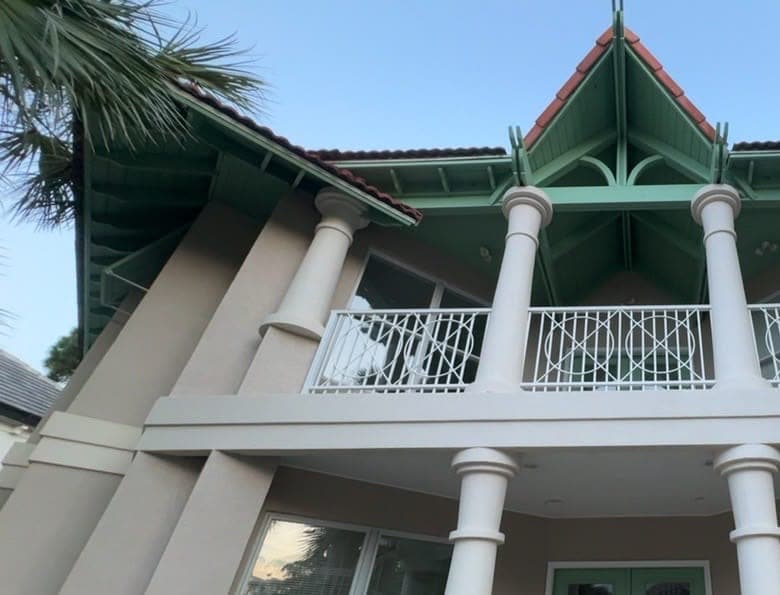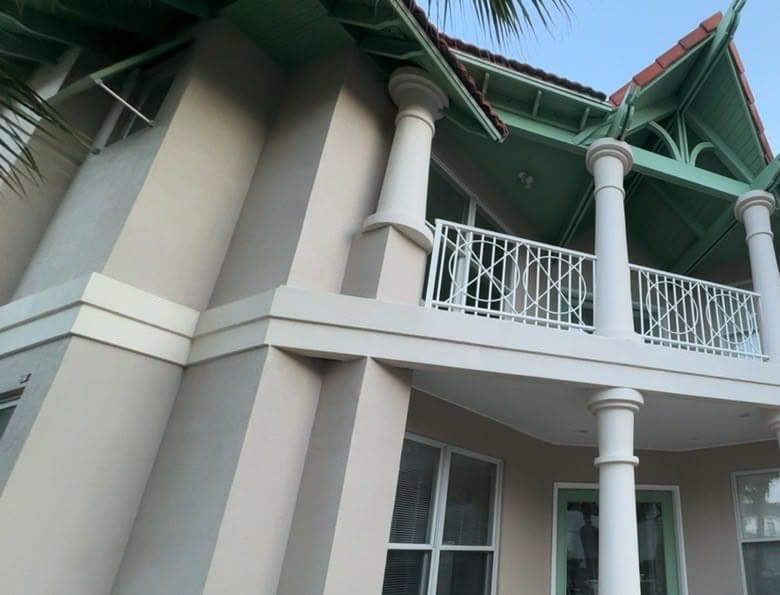
A paint job that lasts 8 to 10 years inland survives only 5 to 7 within a couple of miles of the Gulf. Here is what salt air actually does, the warning signs in order, and how to stretch the interval.
A quality exterior paint job that lasts 8 to 10 years inland typically survives only 5 to 7 years within a couple of miles of the Gulf — and sometimes just 3 to 5 on direct beachfront. If you own or manage property between Pensacola and Panama City Beach, understanding why is the difference between planned maintenance and emergency repair.
How salt air actually destroys paint
Salt does not just sit on your walls. It works chemically and physically at the same time.
- Moisture trapping. Salt crystals absorb humidity and hold a thin film of water against the paint around the clock. Constant dampness breaks down the binders that hold paint together.
- Crystallisation pressure. Salt penetrates microscopic cracks and then expands as it crystallises, physically prying the paint off the substrate. This is why coastal paint fails by peeling and blistering rather than simply fading.
- UV double-team. Florida's intense sun breaks down pigments and resins. Combined with salt, the two age a south- or Gulf-facing wall nearly twice as fast as a sheltered one.
- Corrosion spread. On stucco with metal lath, or around fixtures and railings, salt-driven rust bleeds through and stains the paint around it.
The warning signs, in order of urgency
Chalking — a powdery residue on your hand when you rub the wall. Early binder breakdown; you have time to plan.
Fading — uneven colour loss, worst on the sun-exposed faces. Cosmetic for now, but the film is thinning.
Hairline cracking — moisture is reaching the substrate. Schedule a repaint within the year.
Peeling and blistering — water is already behind the film. Every month of waiting adds prep cost, and on wood or stucco, actual repair cost.
How to get more years out of coastal paint
Wash annually. Removing salt and mildew before they penetrate is the highest-return maintenance move there is. It is also why a company that paints should be the one washing.
Choose the right products. 100% acrylic paints, and elastomeric coatings on stucco, outperform standard products dramatically near the Gulf. Marine-grade primers on metal. The material cost difference is small; the lifespan difference is years.
Prep is 70% of the job. Coastal repaints fail early when salt residue gets painted over. The order is: soft wash, let it dry completely, scrape and sand the failures, spot-prime, then paint. A crew that arrives and starts spraying the same day is painting over the problem.
Do not skip the shady side. Mildew on north-facing walls destroys paint from underneath. It has to be killed with the right solution, not covered.
What this means for HOAs and property managers
For communities and condo associations, the coastal repaint cycle belongs in the reserve study: every 5 to 7 years for buildings near the water, with annual washing budgeted between cycles. Boards that skip the washing years end up repainting a full cycle early — the most expensive way to save money.
If your community is approaching year five, get an assessment before peeling starts. Caught early, targeted work on the exposed elevations sometimes buys two more years.
Cucol LLC paints and washes exteriors across Northwest Florida, so the prep and the paint are one company's responsibility rather than two. [Ask us to look at your building](/en/quote) — the assessment is free and we will tell you if it can wait.