What is the difference between soft washing and pressure washing?
Pressure washing removes what is on the surface. Soft washing kills what is growing in it. The black streaks on a north-facing wall and the green film on siding are not dirt — they are living organisms with roots in the pores of the substrate.
Blast them off with 3,000 psi and the wall looks clean for about four months, because the organism was cut back rather than killed. Treat the same wall at low pressure with the right solution, give it dwell time, rinse, and it stays clean through a season.
Which surfaces must be soft washed?
The rule is simple: if the surface has a coating, a seal, or something under it that water must not reach, it gets soft washed.
- Roof shingles — high pressure lifts granules off asphalt and shortens roof life by years. See roof cleaning.
- Vinyl and fibre-cement siding — pressure forces water behind the lap, where it has no way out
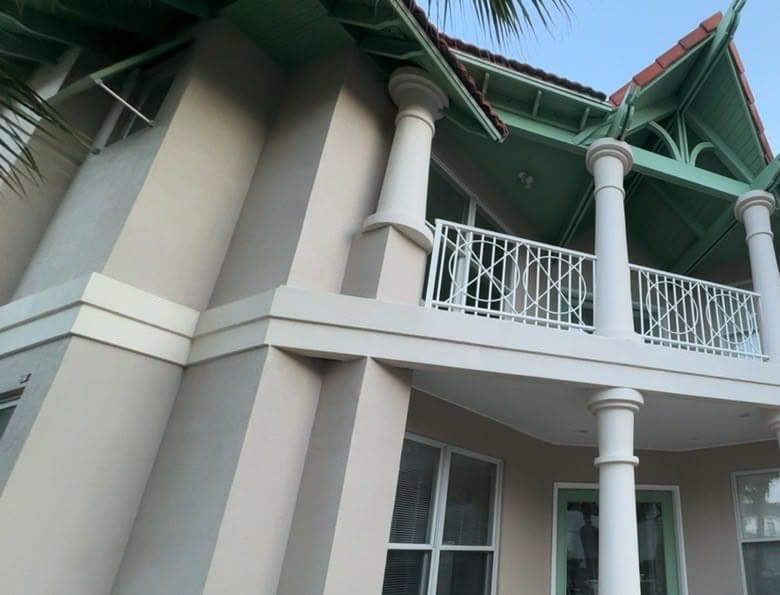
- Stucco — especially older Fort Walton Beach and Pensacola block, where pressure opens hairline cracks into real ones
- Painted wood, trim, soffits and screens
- Anything within a metre of a window seal or a vent
Does the solution harm plants or pets?
It is a diluted cleaning solution, not a stripper, and the job includes pre-wetting and rinsing the landscaping around every elevation we treat. Beds that get pre-wet do not absorb solution. That step takes about fifteen minutes on a typical house and it is the difference between clean siding and dead azaleas.
Pets and people stay indoors while an elevation is being treated and can come back out once it has been rinsed — usually within the hour.
How long does soft washing last on the Gulf Coast?
On a shaded north elevation within two miles of the water, expect 9 to 12 months before mildew is visible again. Inland, closer to 18. Full sun on the south side stays clean longer than anything else on the same building, which is why a house often looks washed on one side and not the other.
If a wash is not lasting six months, the problem is usually drainage or vegetation touching the wall rather than the wash itself, and we will say so instead of selling you a second visit.