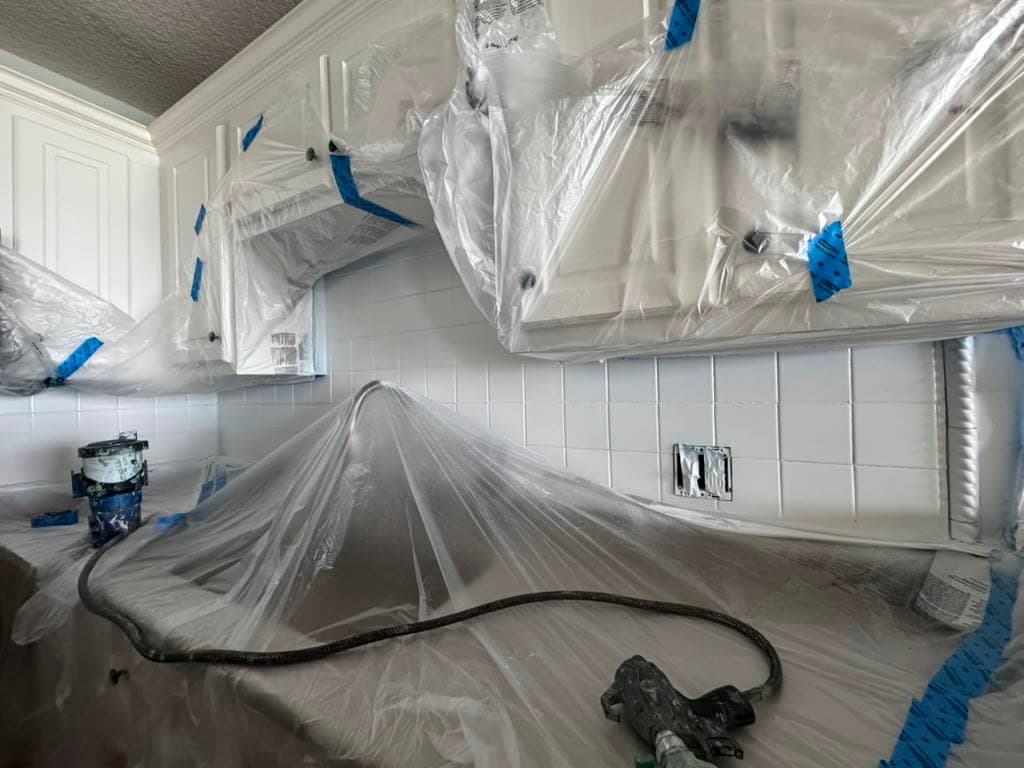
Why one subcontract instead of four trades
On a remodel the finishing sequence is where schedules go wrong: the drywall sub finishes, the texture sub comes back, the painter waits, and any defect between them belongs to nobody. Each handoff is a day, and each day is on your critical path.
We cover the whole finishing package — drywall repair and finishing, texture matching, stucco patch and paint — as one scope with one responsible party. Punch list items come back to the same crew that created them.
What do you need from us before mobilising?
A schedule with real dates and access, and we will hold the window. In return: a COI naming your company, a W-9, and a scope in writing that states exactly which surfaces are in and which are not — because ambiguity in a paint scope is what produces a change order argument at closeout.
- Insurance certificate naming the GC as certificate holder, before mobilisation
- Written scope by surface, not by room, so nothing is assumed
- Punch list turnaround by the original crew rather than whoever is free
- Photo documentation at each phase for your own closeout package
How is remodel work different from new build?
On new build the work is straightforward volume: prime, finish, punch. On remodel it is matching — matching texture to a forty-year-old wall, matching a stucco finish to an elevation that was applied by hand.
At handover, post-construction cleaning is available from the same company, scheduled around the paint cure rather than into it. Cleaning solvent on paint that is dry but not cured is one of the more common ways a finished job gets damaged in its final week.
What does the finishing package cost you in schedule?
On a remodel, the usual finishing sequence is drywall sub, then texture sub, then painter, and each handoff is a day of nobody being on site. Consolidating the three into 1 subcontract typically takes 3 to 4 days out of the critical path on a single-unit remodel, and considerably more across a multi-unit job where the same three trades have to be sequenced twenty times.
The other saving is at closeout. Punch list items on a split finishing package produce an argument about which trade caused what; with one scope there is nobody to argue with, and we turn punch items around in 24 to 48 hours with the crew that did the original work.
Insurance certificates and the W-9 go over before mobilisation rather than during, because in our experience that is the item that most often costs a first engagement its first week.