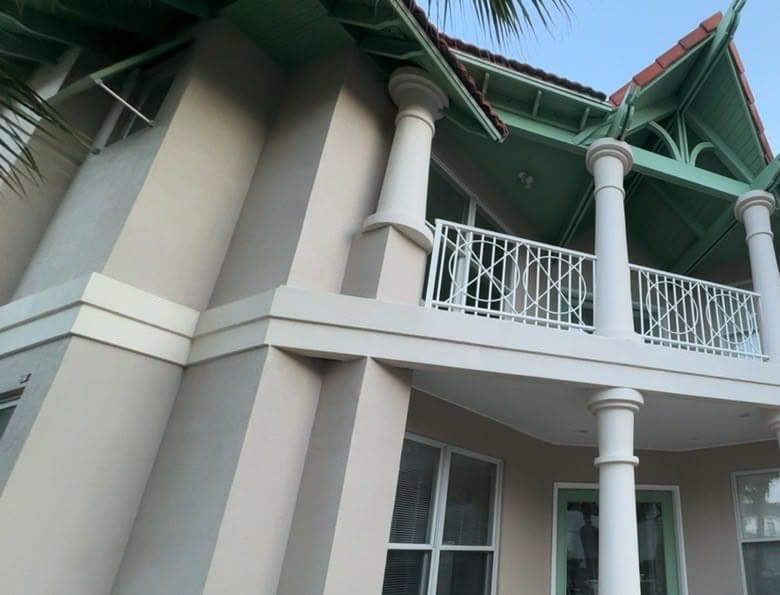
Why one building needs two schedules
Because the two sides of a Gulf-front building are in different climates. The seaward elevation takes constant salt aerosol and full ultraviolet load; the street side is comparatively sheltered.
Washing a whole building on one schedule means either overpaying for the sheltered side or under-serving the exposed one. We price and schedule by elevation, which is also how the repaint cycle should be planned on the same building.
What gets washed on a coastal building
The elements that fail first are rarely the walls:
- Balconies and railings — salt collects in every joint and behind every fixing
- Walkways and stair towers, which are the surfaces residents actually touch
- Building elevations, by soft wash — never pressure on a coated wall
- Pool decks and hardscape — see driveway and paver cleaning
- Entry glass, canopies and signage, which is what a guest photographs on arrival
How is this scheduled around guests?
Building by building and stack by stack, with notices posted in advance. On short-term rental buildings the constraint is check-in and check-out days rather than the season, so we work the mid-week windows.
For associations, the whole-property version of this belongs in the maintenance calendar next to the repaint: annual washing between repaint cycles is what keeps a coastal building on a 7-year cycle instead of a 5-year one.
How long does a building take, and what does it cost?
A 6-storey building with 60 units is typically 3 to 5 working days for the elevations, balconies and walkways, worked stack by stack. Pool decks and hardscape add a day. Access is what drives the number more than area: a building with a service walkway on every floor washes far faster than one that needs lift access from outside.
Pricing is per building with volume rates across a community, and it is quoted by elevation — the Gulf-facing face on a 6 to 9 month cycle and the sheltered side on 12. A board that budgets one annual figure for the whole building is overpaying for one half and under-serving the other.
Every job comes back with before-and-after photographs by elevation, which is what a board needs to close the item out in the minutes rather than take somebody's word for it.