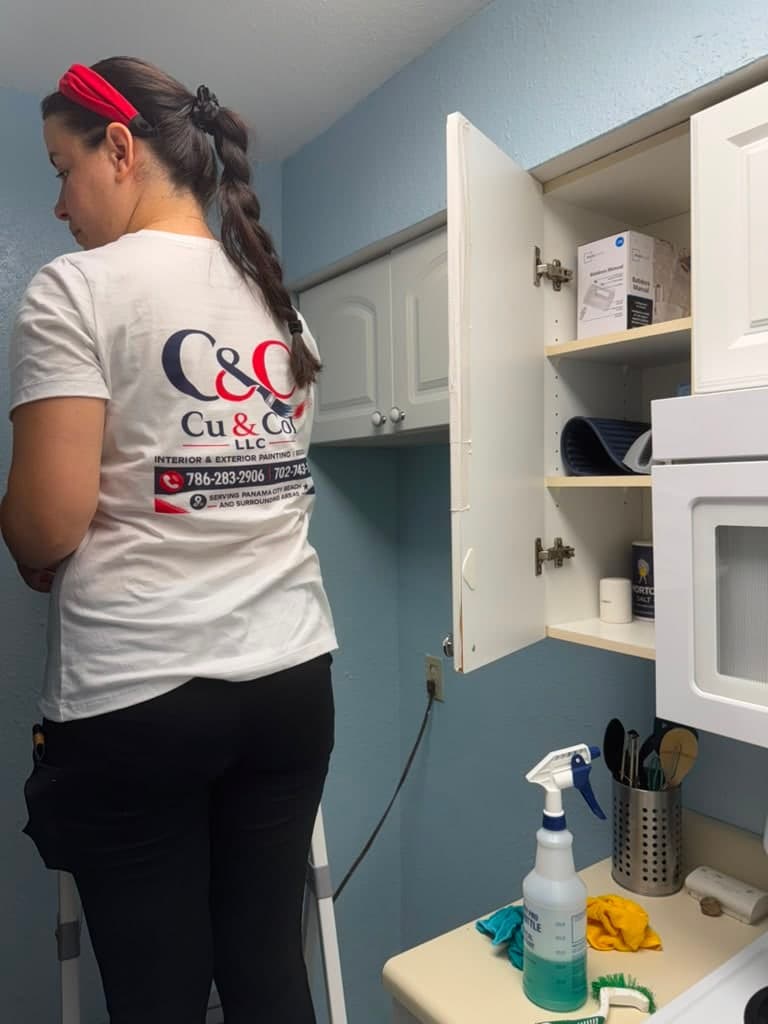
What does a deposit inspection actually check?
Not the floor in the middle of the room. Inspections are a checklist, and the same five places decide the outcome nearly every time:
- Inside the oven and under the hob — the single most common deduction
- Inside the refrigerator, including the seals and the drip tray
- Bathroom grout, the shower door track and the extractor vent
- Inside every cupboard, drawer and closet — an empty cupboard is not a clean one
- Skirting, window tracks and the tops of doors, which is where an inspector runs a finger
Deep clean or move-out clean?
A deep clean is a reset of an occupied home: everything a regular clean does, plus the places a weekly visit never reaches. Nobody is grading it.
A move-out clean is the same work performed against someone else's checklist, with money attached to the result. That difference changes the order of work and, more than anything, it changes the documentation.
Why we photograph everything
Because a dispute about a deposit is a dispute about evidence, and the person with photographs wins it. We photograph the five checklist areas at completion and send them with the invoice.
For property managers turning units at scale that same documentation goes to the owner — it is what makes the charge easy to approve. See property management services and turnover painting, which is usually the other half of the same visit.
How long does a move-out clean take?
4 to 7 hours for a typical 2-bedroom unit with a 2-person crew, and 8 to 10 for a 4-bedroom house. The oven alone is 45 to 60 minutes if it has not been touched in a year, which is why it is the most common deduction: it is the one job nobody wants to do themselves.
For property managers turning units at scale, the clean is booked the morning after the paint so the unit is photographable the same afternoon. One mobilisation covering both, on a fixed per-unit rate, is what keeps a turn inside the 48 to 72 hour window.